
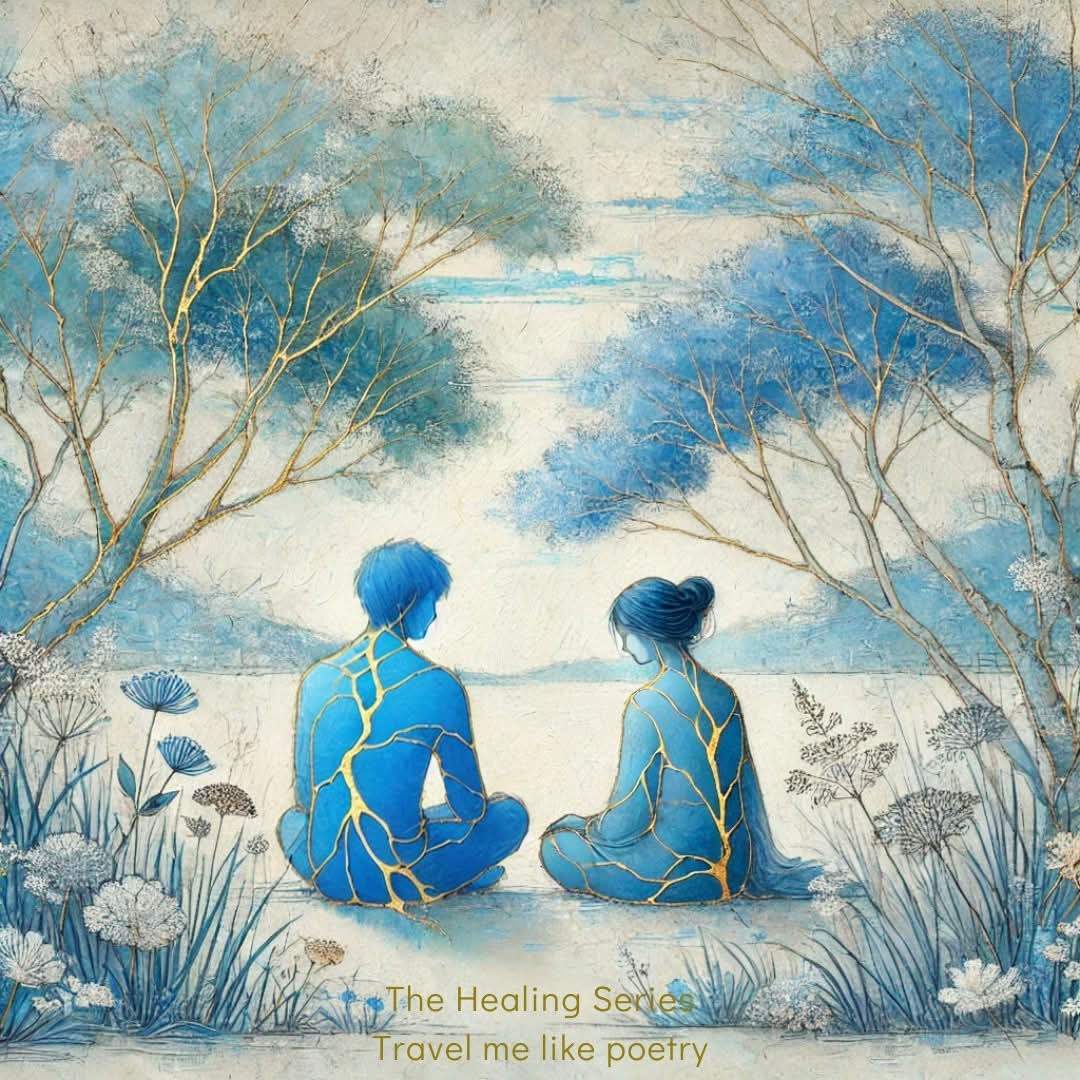
By Sophie Rouméas
We often believe that personal struggles belong solely to those who directly experience them. But what happens when another’s pain stirs something deep within us? Why do we sometimes feel an inexplicable emotional response to someone else’s suffering—even when we are not directly affected by mental illness or trauma?
The Heart’s Recognition
Our minds may try to rationalize: I’m not a therapist. I don’t have schizophrenia, bipolar disorder, or psychosis—so why does this move me so deeply? But beneath this logical response, our consciousness whispers an answer: “Because your heart recognizes those who struggle, those who search for healing. And also those who, in the shadows, try to understand—how to love, how to support, without losing themselves.” Empathy is not just an emotion; it is an unspoken connection to the collective human experience. Sometimes, witnessing another person’s suffering triggers unresolved emotions within us—memories, fears, or wounds we didn’t even realize we carried.
The Systemic Nature of Pain
In trying to make sense of this emotional resonance, we often come across the word “systemic.” It challenges the way we perceive individual struggles. If pain and trauma are not isolated, but instead part of a larger system, then no person exists separately from their context. This perspective shifts the question from “Why is this person struggling?” to “What imbalance is this struggle revealing?” It suggests that those who falter are not the problem, but rather messengers—voices bringing attention to deeper, often unspoken issues within families, communities, or even society at large.
Healing as Acknowledgment, Not Fixing
If suffering is connected to the whole, does that mean healing also happens collectively—even when others are unaware of it? The answer lies not in fixing, but in acknowledging. Healing does not require that everyone consciously participates; sometimes, a shift in one person’s awareness creates a ripple effect, subtly altering the fabric of connection. This is where holistic healing approaches resonate so deeply. Unlike conventional models that focus on fixing what is “broken,” holistic therapies honor the complexity of human experience. They listen to the body, to dreams, to unspoken emotions, and to the wisdom that already exists within us.
Remembering, Reconnecting, Reclaiming
True healing is not about repair—it is about remembering. Remembering who we are beyond our wounds. Reconnecting to the invisible threads that link us to others. Reclaiming our inner wisdom, which perhaps was simply waiting to be met. When we recognize that another’s pain is not separate from our own, we begin to see suffering differently. It is no longer something to be feared or avoided, but rather an invitation—an opportunity to open our eyes to what has long remained hidden. And in that moment of recognition, something shifts. Something is set free.