
Dr. Mahipal Singh Sankhla,
Assistant Professor, Department of Forensic Science, School of Basic and Applied Sciences, K.R. Mangalam University, Gurugram, Haryana

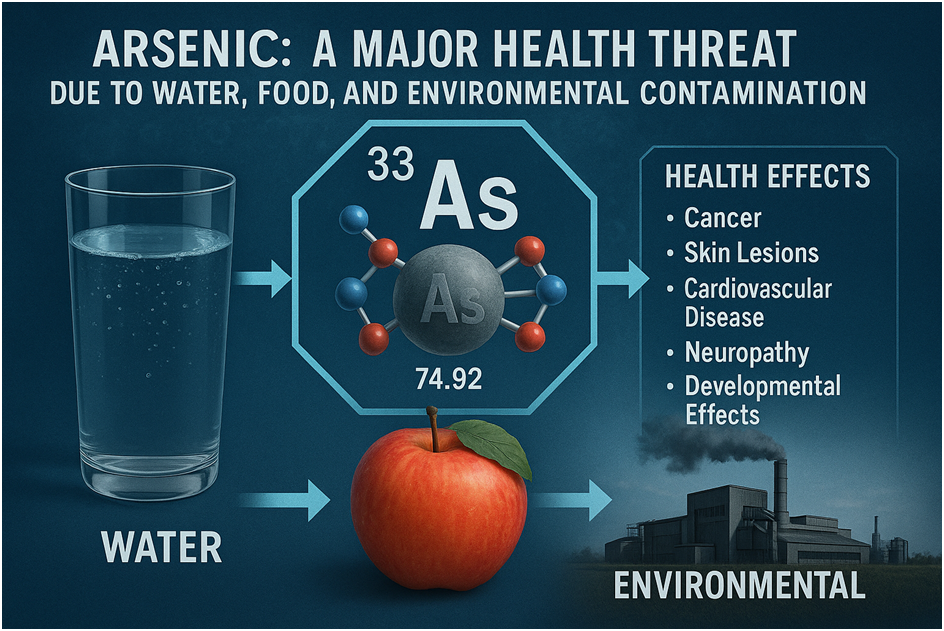
Arsenic, a naturally occurring element in the Earth’s crust, has long been associated with a range of severe health risks. While it is a common element in soil and water, its high toxicity, particularly in its inorganic form, has led to widespread contamination in many parts of the world. Arsenic is both colorless and tasteless, making it difficult to detect, and people often unknowingly ingest it through drinking water, food, and even by inhaling contaminated air. This insidious nature has turned arsenic into a major public health concern, particularly in regions where its concentration in water and food surpasses safety limits. This article explores the widespread presence of arsenic, its sources, the health risks associated with exposure, and effective measures to mitigate these risks.
What Is Arsenic?
Arsenic is a chemical element that occurs naturally in the Earth’s crust and is widely distributed in water, air, and soil. It can exist in both organic and inorganic forms. The inorganic form, which is more toxic, is commonly found in groundwater. Arsenic contamination is not only due to natural geological processes but is also caused by human activities like industrial processes, mining, and the use of arsenic-containing pesticides. The most common exposure routes are through drinking water, food consumption, and inhalation of contaminated air or dust.
Sources of Arsenic Contamination
Arsenic in Drinking Water
Contaminated drinking water is the most significant pathway of arsenic exposure worldwide. In countries such as Bangladesh, India, Argentina, and parts of the United States, arsenic levels in groundwater often exceed the maximum permissible levels set by health authorities. It is estimated that over 140 million people are exposed to arsenic-contaminated water globally, with many living in areas where arsenic concentration is several times higher than the safe limit of 10 micrograms per liter (µg/L) set by the World Health Organization (WHO). Groundwater in some areas, particularly in low-lying delta regions, has been contaminated with arsenic for centuries, and it continues to affect drinking water supplies today.
Arsenic in Food
Arsenic can also contaminate the food supply, especially crops that are grown in arsenic-laden soil or irrigated with contaminated water. Rice is particularly prone to arsenic contamination as it absorbs large amounts of arsenic from the water used for irrigation. Countries where rice is a staple food, such as India, China, and Bangladesh, face significant risks from arsenic exposure through their diet. Other foods, including vegetables and fruits, can also become contaminated depending on soil conditions, irrigation methods, and pesticide use. Moreover, seafood, particularly fish and shellfish, can contain organic arsenic compounds, though they are generally considered less harmful than inorganic forms of arsenic.
Arsenic in Air
Industrial activities such as mining, coal burning, and smelting of metals release arsenic particles into the air. In areas near mines, smelting facilities, or industries that use arsenic-containing materials, inhalation of arsenic-laden dust and fumes poses a significant risk to the local population. People working in these industries, as well as those living nearby, are particularly vulnerable.
Arsenic from Industrial and Agricultural Activities
Historically, arsenic has been used as a pesticide in agriculture, and its residual presence in soil can lead to contamination of crops. In some cases, industrial discharge from arsenic-processing industries, coal combustion, and metal smelting can result in significant environmental contamination. These activities release arsenic into the soil, water, and air, where it can be absorbed by plants and animals.
Arsenic in Soil
Soil contamination with arsenic is often the result of years of industrial activity, agricultural pesticide use, or atmospheric deposition of airborne arsenic. When arsenic is present in soil, it can be absorbed by crops grown in the contaminated soil, leading to direct exposure for consumers. Furthermore, when soil contamination is severe, arsenic can leach into groundwater, making the problem even more widespread.
Health Effects of Arsenic Exposure
Arsenic is classified as a Group 1 carcinogen by the International Agency for Research on Cancer (IARC), which means that it is a proven carcinogen to humans. Long-term exposure to arsenic, even at low concentrations, can result in a variety of serious health issues, particularly because it accumulates in the body over time.
Cancer
The most well-established health risk associated with arsenic exposure is an increased risk of cancer. Arsenic exposure has been strongly linked to cancers of the skin, lungs, bladder, kidneys, and liver. The long-term ingestion of arsenic-contaminated water, for example, is associated with an elevated risk of developing these cancers, especially in communities that rely on contaminated groundwater for drinking and irrigation. In fact, studies have shown that people exposed to arsenic through drinking water have a significantly higher risk of skin cancers, including squamous cell carcinoma.
Skin Lesions
Chronic arsenic exposure is also associated with skin changes. The most common signs include the appearance of hyperpigmentation (dark spots) and keratosis (thickened skin) on the palms, soles, and back. In more severe cases, these lesions can develop into skin cancer. Skin lesions often appear after several years of exposure to arsenic, making them one of the earliest signs of arsenic poisoning.
Cardiovascular Disease
Arsenic exposure is linked to an increased risk of cardiovascular diseases, including hypertension (high blood pressure) and peripheral vascular disease (narrowing of the blood vessels). Studies have shown that people living in arsenic-contaminated regions have a higher incidence of heart disease, stroke, and other cardiovascular conditions.
Neurological Damage
Long-term exposure to arsenic has been associated with neurological effects, particularly cognitive impairments. Children who are exposed to arsenic in utero or during early childhood may experience developmental delays, lower IQ, and behavioral problems. Adults who have been exposed to high levels of arsenic for prolonged periods may also experience memory problems, attention deficits, and neurological damage.
Respiratory Effects
Inhalation of arsenic dust, particularly in industrial settings, can lead to respiratory issues. Long-term exposure to airborne arsenic can increase the risk of lung cancer, as well as chronic respiratory diseases such as bronchitis and emphysema. People working in arsenic-producing industries are at the highest risk of developing these conditions.
Diabetes
Arsenic exposure has been linked to an increased risk of developing type 2 diabetes. Studies have suggested that arsenic can impair insulin secretion from the pancreas and interfere with glucose metabolism, leading to insulin resistance and elevated blood sugar levels. In regions with high arsenic levels in drinking water, the prevalence of diabetes is significantly higher.
Kidney and Liver Damage
Arsenic is toxic to the kidneys and liver, and long-term exposure can lead to impaired organ function. Chronic arsenic poisoning can cause the buildup of toxins in these organs, resulting in liver damage, kidney failure, and even organ death in extreme cases. Kidney and liver damage from arsenic exposure can also increase the risk of cancer in these organs.
Reproductive and Developmental Effects
Arsenic exposure is harmful to reproductive health. Women exposed to high levels of arsenic during pregnancy are at a higher risk of delivering babies with lower birth weights, developmental delays, and birth defects. Arsenic exposure may also affect male fertility and reduce sperm quality, further contributing to reproductive health risks.
Preventing and Reducing Arsenic Exposure
Given the serious health risks associated with arsenic exposure, it is crucial to adopt preventive measures to reduce the impact of arsenic on human health. Here are some key strategies:
Water Filtration
The most effective method for reducing arsenic exposure is through the use of water filtration systems. Reverse osmosis (RO) filters, activated carbon filters, and distillation units are highly effective in removing arsenic from drinking water. In regions where arsenic contamination is prevalent, governments and local authorities should provide accessible water treatment solutions and raise awareness about the importance of water filtration.
Monitoring Water Quality
Regular monitoring of water sources is essential to ensure that arsenic concentrations remain within safe limits. In many affected regions, it is crucial to test both well water and public water supplies regularly to identify areas with high arsenic concentrations. If contamination is found, corrective actions such as water treatment or switching to safer water sources should be undertaken immediately.
Soil Management and Agriculture
Reducing arsenic exposure from food requires better management of soil and agricultural practices. This includes avoiding the use of arsenic-based pesticides, using clean water for irrigation, and adopting safer farming practices. Farmers should be encouraged to test their soil regularly and consider using alternative, non-toxic methods for pest control.
Public Awareness and Education
Raising public awareness about the dangers of arsenic contamination and the importance of reducing exposure is vital. Public health campaigns should focus on educating communities about how to recognize arsenic contamination in drinking water and food, and provide guidance on the use of water filtration systems and safer agricultural practices.
Government Regulations and Policies
Governments must implement and enforce regulations that set safe limits for arsenic concentrations in drinking water, food, and the environment. Stricter regulations should be enforced on industrial and agricultural practices that contribute to arsenic contamination. In areas where arsenic contamination is widespread, authorities should provide alternative sources of clean water or provide funding for water treatment systems.
Conclusion
Arsenic remains one of the most insidious environmental toxins due to its widespread presence in water, food, soil, and air. The long-term exposure to arsenic, particularly through contaminated drinking water, poses a significant threat to human health. Its ability to accumulate in the body over time and its association with a range of chronic diseases such as cancer, cardiovascular issues, neurological damage, diabetes, and liver and kidney damage highlights the urgent need for comprehensive measures to reduce exposure and mitigate its effects.In many parts of the world, especially in regions dependent on groundwater as a primary source of drinking water, arsenic contamination has become a public health crisis. The challenge lies not only in recognizing the problem but also in providing effective solutions that can be scaled to ensure safe drinking water and food for all. Fortunately, modern water filtration systems, such as reverse osmosis, activated carbon, and distillation, have proven to be effective at removing arsenic from water, offering a practical solution to one of the most significant routes of exposure.However, the problem of arsenic contamination is not limited to water. Food grown in arsenic-contaminated soil, especially rice, continues to pose a substantial risk, particularly in regions where rice is a staple food. Therefore, addressing arsenic exposure requires an integrated approach that involves monitoring and managing water quality, improving agricultural practices, and fostering public awareness on the risks and preventive measures. The need for research into alternative, non-toxic agricultural practices and safer, more sustainable methods of food production cannot be overstated.Governments, industries, and communities must collaborate to implement stronger regulations to limit industrial pollution and agricultural practices that contribute to arsenic contamination. The widespread availability of arsenic testing kits, better public health education, and access to safe, treated water should become priorities for affected regions.The consequences of inaction are dire. In regions with high arsenic exposure, the long-term health implications can overwhelm healthcare systems and lead to devastating effects on individuals and families. Therefore, it is critical that we view arsenic contamination not as a localized problem but as a global health challenge that requires urgent attention from all sectors of society. By improving infrastructure, enforcing regulations, and advancing scientific research, we can reduce arsenic exposure and protect millions of lives worldwide.tackling the problem of arsenic contamination demands a multifaceted and sustained approach. While significant progress has been made in understanding the health risks associated with arsenic, continued efforts are essential to combat this growing public health threat. Through innovation, regulation, education, and community engagement, we can mitigate the harmful effects of arsenic exposure and ensure healthier, safer environments for future generations. The need for action is now, and it is only by working together that we can resolve the global challenge posed by arsenic and protect human health at every level.