
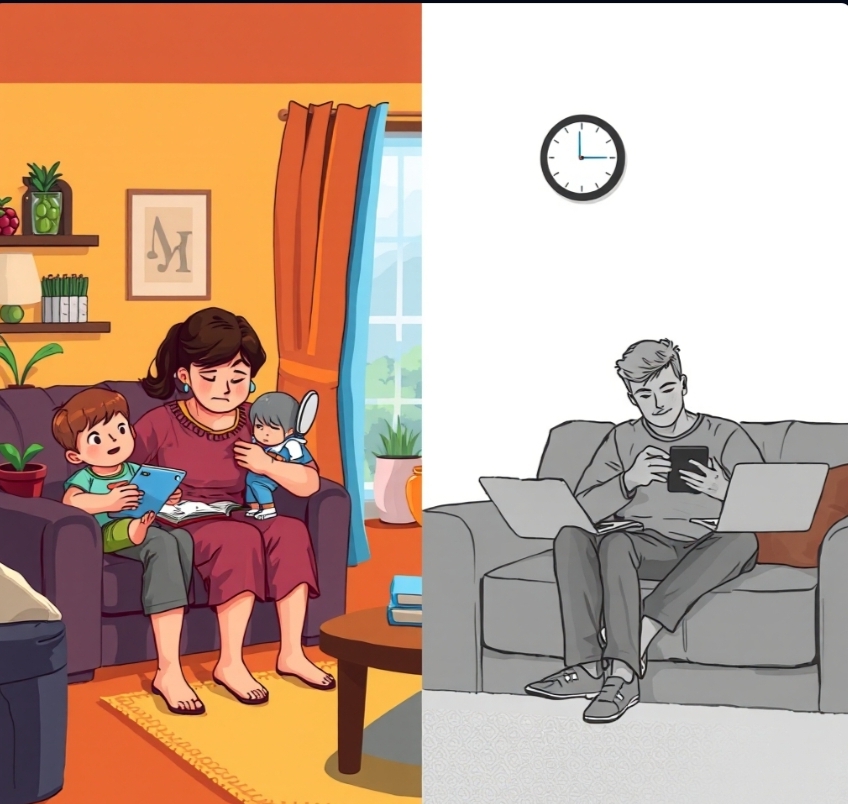
In contemporary households across the globe—particularly in Indian families—a
quiet but significant shift is taking place. While families may appear structurally
intact, the emotional architecture within is often imbalanced. One partner seems to
be actively engaged in the day-to-day responsibilities—managing the home,
children, finances, and emotional labour—while the other is emotionally distant,
physically present but mentally absent.
This “one present, one absent” phenomenon is not always a result of negligence or
unwillingness. It is often rooted in cultural conditioning, generational patterns, work
stress, or unresolved emotional baggage. But regardless of the cause, the impact is
profound—especially on the emotional well-being of children and the health of the
relationship itself.
Historical Context: Then vs. Now
In the 18th and early 20th centuries, traditional Indian family structures were largely
patriarchal. Fathers were expected to be the sole earners, while mothers managed
the household and raised the children. While this model placed a disproportionate
burden on women, the roles were clearly defined, and emotional involvement,
especially from mothers, was woven into daily life.
Today, however, those lines have blurred. Both partners may be working
professionals, yet the responsibility of emotional labour—checking in on the children,
maintaining family routines, attending to aging parents, handling school
meetings—often still falls on one individual. The other, though physically present,
may be emotionally disengaged due to work pressures, screen addiction, or simply
because they’ve never been taught how to participate emotionally in a family system.
The Cost of Emotional Absence
This imbalance doesn’t just lead to burnout for the “present” partner—it has deeper
psychological consequences:
Children learn imbalance as normal. They may replicate these roles in their future
relationships.
Emotional neglect becomes normalized. Feelings are invalidated or ignored, which
can manifest as anxiety, low self-worth, or behavioural issues in children.
The active partner becomes overwhelmed, often struggling with silent resentment,
exhaustion, and emotional isolation.
Partnership turns transactional, where relationships run like task lists rather than
connections of warmth and mutual care.
The Professional Lens: What Should We Notice?
As counsellors, educators, HR professionals, or therapists, we must be aware of
signs that a family system is emotionally off-balance:
Children showing perfectionism or hyper-independence (trying to fill emotional gaps).
One parent consistently over-involved while the other is barely engaged.
Families reporting chronic exhaustion or breakdowns in communication.
Moving Toward Emotional Equity
Here’s what families—and professionals guiding them—can do:
- Start the conversation. Normalize discussing emotional labour and roles within the family.
- Educate about presence. Presence isn’t just about being home—it’s about being emotionally available.
- Redefine masculinity and femininity. Teach that emotional intelligence, nurturing, and participation in parenting are gender-neutral responsibilities.
- Encourage joint parenting. Both partners should attend school meetings, participate in routines, and share decision-making.
- Promote mental health check-ins. Just like physical health, emotional well-being requires regular maintenance.
Conclusion: Balance Is a Skill, Not a Given
In this fast-paced, tech-driven world, emotional absence has become a silent epidemic in modern families. The remedy is not just in sharing tasks but in building conscious presence. Emotional availability must be learned, modelled, and encouraged—at home and in our professional dialogues.
Let us, as professionals, be the voice that helps families move from functional
survival to emotional thriving.