

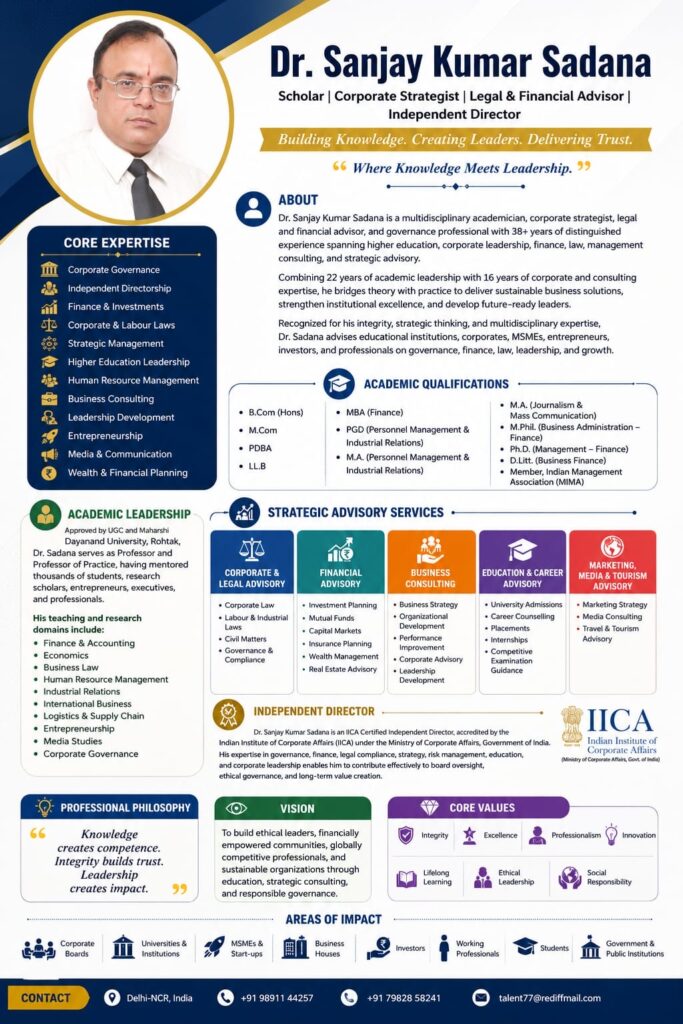
In an evolving corporate landscape where board oversight, ethical leadership, and stringent regulatory compliance dictate organizational longevity, the role of an Independent Director (ID) has shifted from a statutory checkbox to a strategic imperative. To explore how professional expertise translates into effective board governance, Achievers Talk sat down with Dr. Sanjay, a seasoned academician, legal mind, and finance expert whose multi-disciplinary background exemplifies the high standards expected of modern board leaders in India.

The Evolution of Boardroom Integrity
Under the framework of the Companies Act, 2013, and SEBI (LODR) regulations, Independent Directors act as the conscience of a company. Free from pecuniary ties, executive baggage, or promoter influence, their core mandate is clear: protect minority shareholder interests, enforce robust risk management, and bring unbiased judgment to critical decision-making.
“True independence in the boardroom isn’t just about meeting regulatory disqualification criteria,” notes Dr. Sardana. “It is an active practice of asking tough questions, evaluating related-party transactions with a magnifying glass, and ensuring that strategic growth never compromises institutional integrity.”
Key Takeaways from the Exclusive Dialogue
During the interaction, Dr. Sadana broke down the essential pillars that define high-impact corporate governance and the evolving expectations for board members today:
The Power of Multi-Disciplinary Oversight:
Modern business environments present complex challenges where legal, financial, and operational risks intersect. Having a background that spans academic rigor, legal frameworks, and financial acumen allows an Independent Director to evaluate internal audit controls and statutory compliance with deep precision.
Active Committee Stewardship:
An ID’s most vital work occurs within board committees—specifically the Audit Committee, the Nomination & Remuneration Committee (NRC), and the Stakeholder Relationship Committee. Effective oversight in these forums ensures proper executive compensation, transparent financial reporting, and reliable whistleblower mechanisms.
Empowering the IICA Framework:
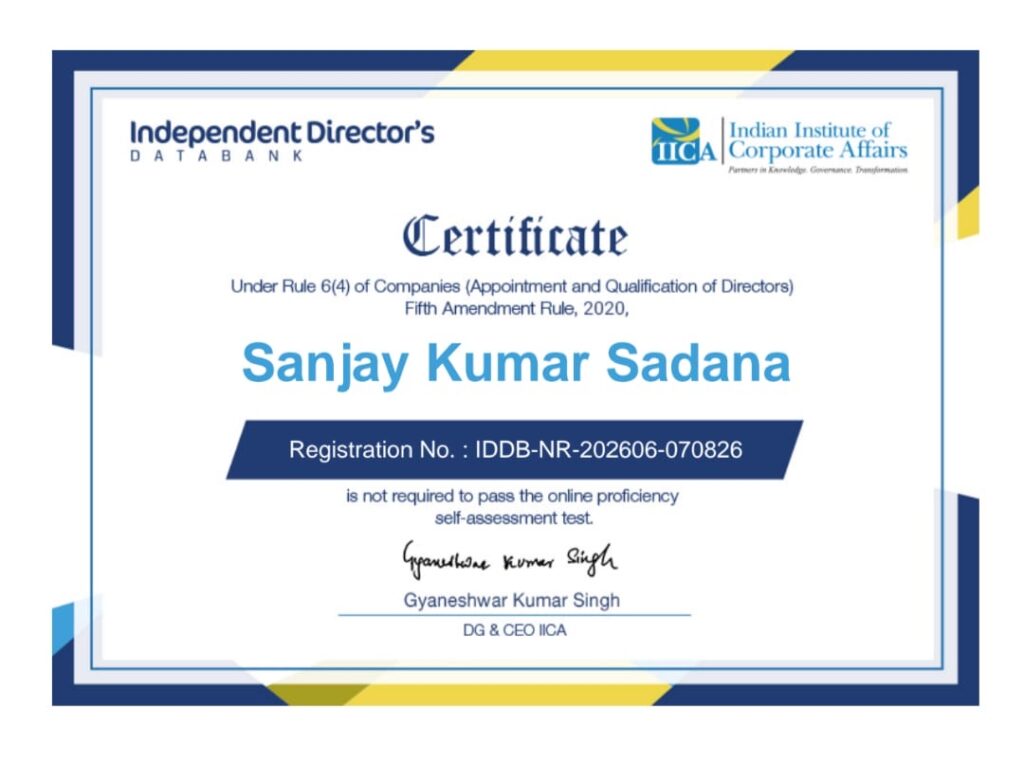
With the introduction of the Indian Institute of Corporate Affairs (IICA) Data Bank and the mandatory Online Proficiency Self-Assessment Test, Indian corporate governance has elevated its entry barrier. This ensures that listed and key unlisted public companies are guided by certified, highly qualified professionals equipped for fiduciary responsibility.
Looking Ahead: The Future of Governance
As Indian enterprises scale globally and ESG (Environmental, Social, and Governance) metrics become central to investor trust, the demand for high-caliber Independent Directors continues to grow. Leaders like Dr. Sanjay Sadana demonstrate that when academic depth, legal clarity, and ethical conviction converge, board oversight transforms from a legal obligation into a core driver of sustainable corporate value.