By Achievers Talk & Garbage Clinic Foundation
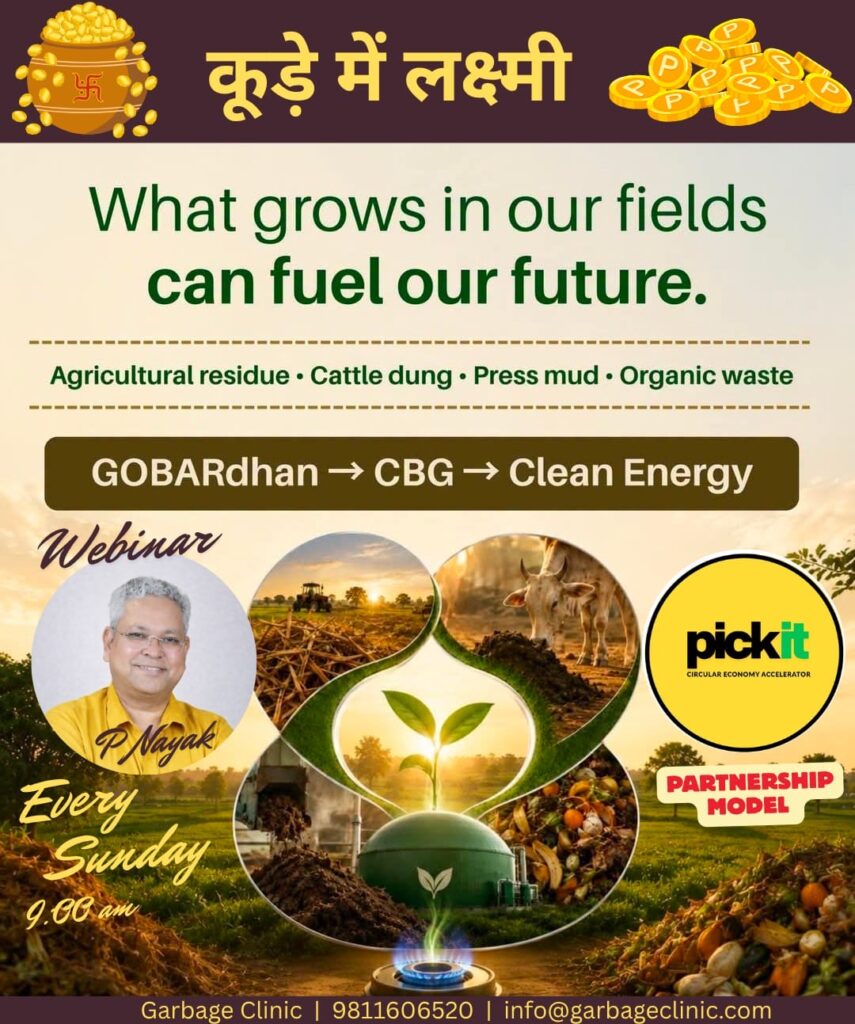
As India accelerates toward a sustainable energy ecosystem, our most scalable renewable resource lies in our organic waste. Across rural and urban landscapes, millions of tonnes of agricultural residue, cattle dung, press mud, and municipal bio-waste present significant management challenges. Converting this organic burden into Compressed Biogas (CBG) offers a viable, commercially robust pathway toward circular bio-economy and energy self-reliance.
A Financially & Operationally Viable Model
The economic model for organic waste management is strengthened by policy alignment and technological integration:
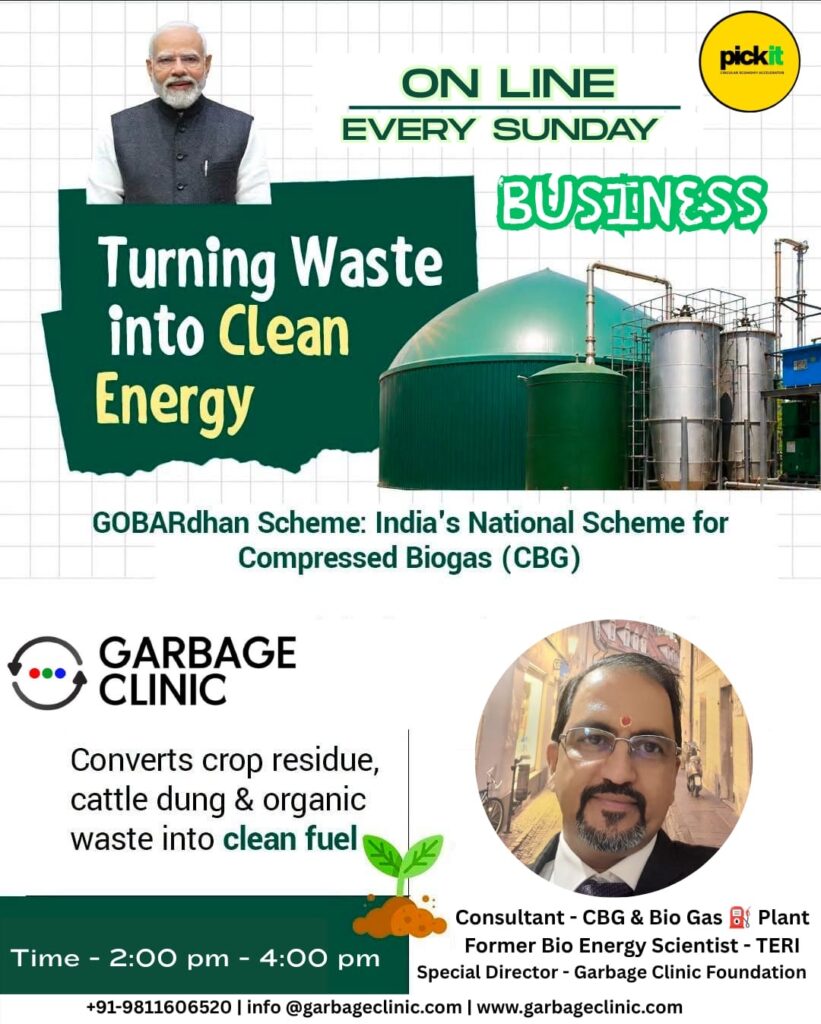
1. National Policy Framework: The Government of India’s GOBARdhan Scheme provides a consolidated ₹23,731 crore framework designed to scale domestic CBG production ten-fold. With capital assistance of up to ₹2 crore per Ton Per Day (TPD) of capacity, bankable credit guarantee mechanisms, and integrated pipeline connectivity, project economics have transitioned from speculative to highly investable.
2. Assured Revenue Streams: Biogas projects secure dual-revenue stability:
Clean Energy Offtake: Government-backed pricing frameworks (at ₹2,110 per MMBTU) and mandatory CBG blending obligations for City Gas Distribution networks provide long-term revenue certainty.
Bio-Fertilizer Valorization: Co-producing Fermented Organic Manure (FOM) replaces chemical fertilizers, restoring soil health while creating an additional revenue channel.
3. Decentralized Supply Chains: Developing structured rural aggregation hubs for crop residue and manure addresses raw material volatility, creating predictable feedstock logistics while offering farmers alternative income streams instead of stubble burning.
Driving Impact at Scale
Anaerobic digestion of organic waste yields substantial environmental and socio-economic dividends:
Methane Abatement: Diverting organic waste from landfills directly mitigates methane—a greenhouse gas with 28 times the global warming potential of CO₂.
Foreign Exchange Savings: Expanding domestic CBG capacity directly substitutes imported LNG, conserving vital foreign exchange reserves.
Rural Livelihoods: Localized waste-to-energy ecosystems generate decentralized employment across feedstock harvesting, transportation, plant operations, and fertilizer distribution.
The Path Forward
The Garbage Clinic Foundation, in collaboration with Achievers Talk, acts as a catalyst in this transformation—bridging scientific expertise, waste segregation methodologies, and project execution. By scaling CBG plants across districts, converting waste into clean fuel ceases to be just an environmental virtue; it becomes a profitable, scalable, and indispensable engine for national green growth.